
Best Native Plants for Ohio Gardens (And Where to Find Them in Zanesville)
If you’ve spent any time gardening in Southeastern Ohio, you already know the deal. The clay is stubborn, the summers get muggy, the winters can swing hard, and whatever you plant needs to actually want to be here. That’s exactly why native plants keep coming up in conversations at garden centers, on neighborhood Facebook groups, and at the Zanesville Farmers Market. People are tired of babysitting temperamental exotics that sulk through August and die over a cold February.
Native plants are plants that grew in a particular region before European settlement. They didn’t arrive in a nursery pot from a wholesale grower in Florida. They evolved here, alongside Ohio’s insects, birds, soil microbes, and seasonal extremes. That long history is what makes them so different to work with. They know how to handle a Zone 6a winter. They know how to push through clay. Once they’re established, they mostly just get on with it.
This post walks through some of the best native plants for Ohio gardens, with particular focus on varieties that perform well in the Zanesville area and Muskingum County. At the end, you’ll know exactly where to go to find quality native plants locally.
Why Ohio Gardeners Are Switching to Native Plants
The shift toward native plants in Ohio gardens isn’t a trend driven by aesthetics alone. There’s a practical reason so many homeowners in the Zanesville area are making the change, and it comes down to maintenance.
Exotic ornamentals often need supplemental watering during dry spells, soil amendments to correct pH, fertilizer to push growth, and protection from pests that haven’t evolved alongside them. Native Ohio plants, by contrast, developed root systems specifically designed for local rainfall patterns. Many are drought-tolerant once established, handle our clay-heavy soils without complaint, and feed the pollinators, birds, and beneficial insects that make a garden feel alive.
Zanesville sits in USDA Hardiness Zone 6a, which means average minimum winter temperatures between -10 and -5 degrees Fahrenheit. That’s a real test for plants. Native species that evolved through Ohio’s freeze-thaw cycles pass that test without much help from the gardener.
There’s also the pollinator story. Bees, butterflies, and hummingbirds depend on plant species they co-evolved with. A yard full of non-native ornamentals might look beautiful but function as a green desert for local wildlife. Planting Ohio natives gives you color and structure in the garden while genuinely contributing to the ecosystem around you.
The Best Native Plants for Ohio Gardens
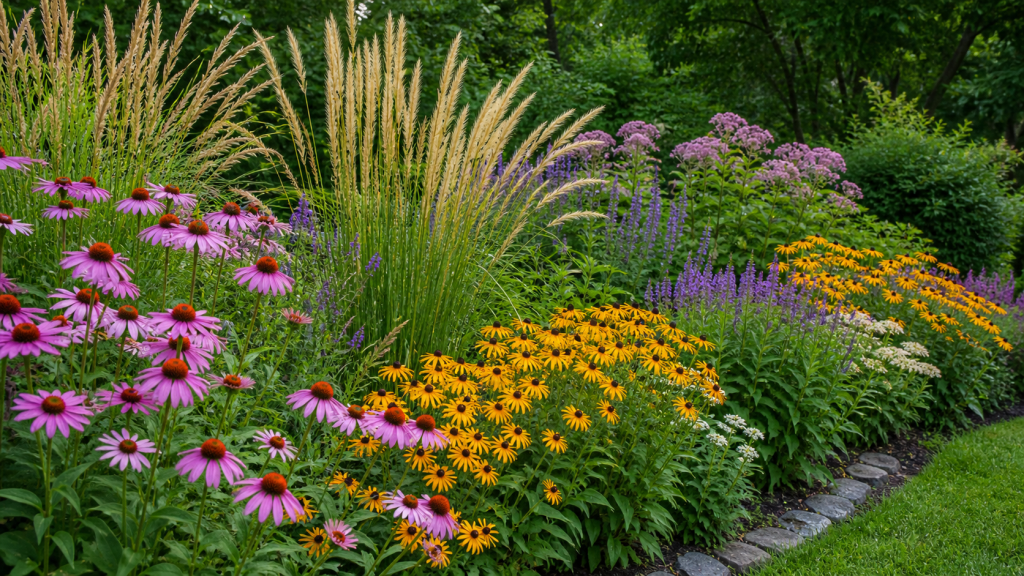
Purple Coneflower (Echinacea purpurea)
Purple coneflower is one of the workhorses of the native Ohio garden. It blooms from midsummer into early fall, produces rosy-pink petals around a bold orange-brown cone, and holds up through heat and humidity without flinching. Bees work coneflower constantly during its bloom period, and goldfinches return for the seed heads well into winter if you resist the urge to cut them down in autumn.
For Zanesville-area gardeners, coneflower is reliable in full sun to part shade. It handles clay soil reasonably well, though it performs best with decent drainage. Plant it once and it will self-seed and naturalize over time, filling out a bed without any intervention. Start with three plants in a grouping and let them do the rest.
Black-Eyed Susan (Rudbeckia hirta)
If there’s a more recognizable summer wildflower in Ohio, it’s hard to think of one. Black-eyed Susan is native across the state and thrives in exactly the kind of sunny, open conditions that describe most residential yards in Muskingum County. The bright yellow petals around a dark central cone bring a warmth to the garden from June through September that’s genuinely hard to replicate with non-natives.
What makes black-eyed Susan particularly useful is its adaptability. It tolerates poor soil, handles dry summers, and grows in disturbed areas where other plants refuse to take hold. It’s a smart choice for slopes, road edges, or any sunny spot where you want reliable color without regular maintenance. It also pairs beautifully with coneflower and native grasses, creating that layered meadow look that’s becoming increasingly popular in Zanesville-area landscapes.
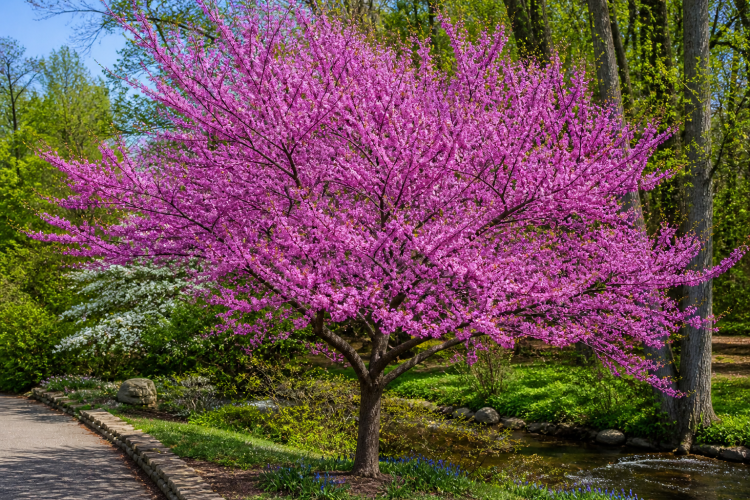
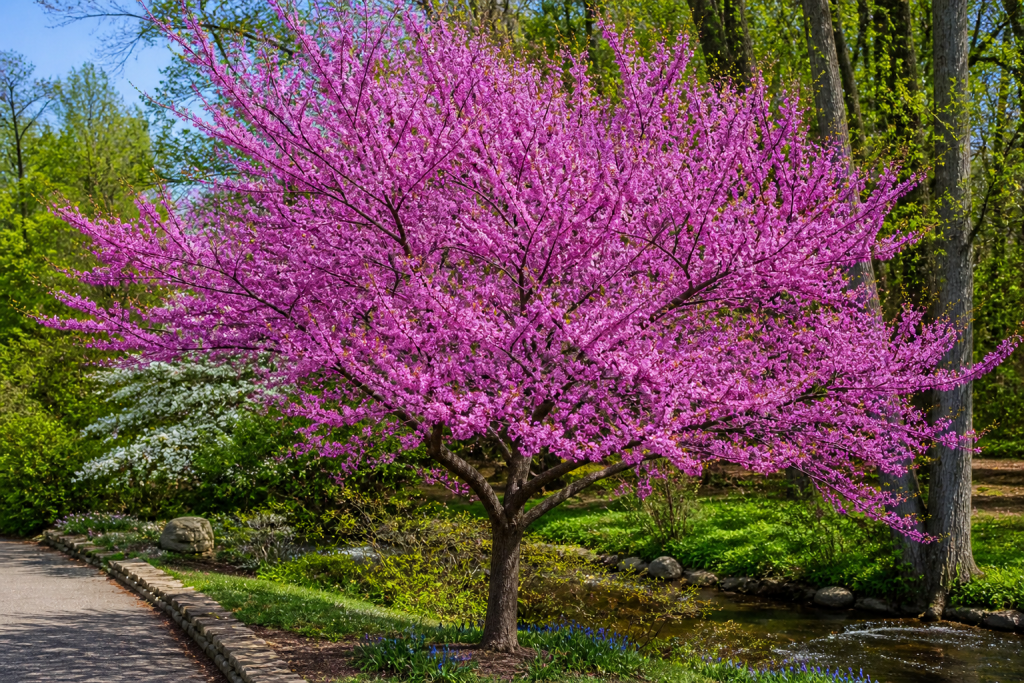
Eastern Redbud (Cercis canadensis)
If you want a native tree that stops people on the sidewalk in spring, Eastern Redbud is it. Before the leaves even emerge, the branches light up with clusters of deep magenta-pink blossoms that cover the entire tree. It’s one of the earliest flowering trees in Ohio, providing critical nectar for pollinators coming out of winter dormancy when little else is in bloom.
Eastern Redbud grows to about 20 to 30 feet tall with a similar spread, making it a manageable size for most residential properties. It thrives in Zone 6a, tolerates part shade (which makes it ideal as an understory tree beneath larger oaks or maples), and develops attractive heart-shaped leaves after flowering that hold through summer. Fall color is a nice bonus, with leaves turning yellow before dropping. For Zanesville homeowners looking for a native landscape tree with real visual impact, it’s one of the strongest options available.
Wild Blue Indigo (Baptisia australis)
Wild blue indigo is the native perennial that experienced Ohio gardeners recommend to anyone willing to be patient. It takes a couple of seasons to fully establish, but once it does, it becomes one of the most striking plants in the garden. Tall spikes of deep blue-purple, pea-like flowers rise in late spring and early summer, followed by inflated seed pods that turn charcoal black and rattle in the wind through winter. The whole plant earns its space across three seasons.
More practically, baptisia is remarkably tough. It fixes nitrogen in the soil, so it actually improves the ground around it over time. It’s deeply drought-tolerant, deer-resistant, and long-lived. Plant it in full sun in Zanesville-area gardens and leave it alone. Moving or dividing it is not advised because the taproot runs deep. Pick the right spot, plant it once, and enjoy it for decades.
Switchgrass (Panicum virgatum)
Not every Ohio native garden needs to be all flowers. Native grasses add movement, texture, winter structure, and nesting material for birds, and switchgrass is one of the best you can plant in this part of the state. It grows in upright clumps with airy seed heads that catch the light beautifully in late summer and fall. Through winter, the dried stems and seed heads hold their shape and give the garden something to look at after everything else has died back.
Switchgrass handles Ohio clay, seasonal wet spots, and summer drought with equal composure. In Muskingum County, where soil conditions vary considerably from property to property, that adaptability matters. It grows in full sun to light shade and can reach four to six feet depending on the cultivar. ‘Shenandoah’ is a popular selection for residential gardens because of its manageable size and deep red fall color.
Butterfly Milkweed (Asclepias tuberosa)
This is the native perennial that gets the most enthusiastic response from gardeners who’ve never grown it before. The flowers are a vivid, almost tropical orange, appearing in early to midsummer and attracting a remarkable volume of pollinators, including multiple bee species, swallowtail butterflies, and monarch butterflies, for which milkweed is the only host plant.
Butterfly milkweed is happiest in very well-drained, even poor soil, which makes it an excellent choice for sunny slopes, gravel gardens, or any spot in the Zanesville area that tends to bake dry in summer. Unlike many plants that need good soil to perform, butterfly milkweed actually dislikes rich, heavy clay. Give it gritty, fast-draining ground and full sun, and it will reward you with decades of reliable color. It’s slow to emerge in spring, so mark its location to avoid accidentally disturbing it.
Ohio Goldenrod (Solidago ohioensis)
Goldenrod gets an unfair reputation because people conflate it with ragweed, which blooms at the same time and is the actual culprit behind late-summer allergies. Goldenrod’s pollen is too heavy and sticky to be wind-dispersed; it needs insects to move it. What goldenrod actually does is support an enormous number of native bees, wasps, beetles, and butterflies during the late summer and fall period when most other flowers have finished.
Ohio Goldenrod erupts in plumes of bright yellow from August through September, precisely when the garden needs it most. It spreads by rhizome, so give it space or plant it where naturalization is welcome. Along the back of a border, in a rain garden, or in a naturalized area of a larger property, it performs brilliantly. In Zanesville-area gardens, it combines beautifully with New England aster, which blooms in purple and lavender through the same period, creating a classic late-season native combination.
New England Aster (Symphyotrichum novae-angliae)
Speaking of New England Aster, this is one of the most underused native plants in Ohio residential gardens. It blooms in purple, violet, and occasionally pink from September into October, when most of the garden is winding down. For pollinators, particularly migrating monarchs, late-season asters are genuinely important food sources at a critical time of year.
New England Aster grows to three to five feet tall in full sun and needs staking or pinching back in early summer to stay compact. It’s comfortable in average to moist soils, which describes a lot of Zanesville-area yards. Plant it at the back of a border, let it do its thing, and you’ll have one of the most reliable sources of late-season color in the neighborhood, with the added benefit of feeding every passing butterfly in October.
Flowering Dogwood (Cornus florida)
Flowering dogwood is native across Ohio and is arguably one of the most beautiful small trees you can plant in a residential garden. The white (or occasionally pink) bracts in spring are striking, the summer foliage is a clean glossy green, the fall color runs to reds and purples, and the red berries that follow attract birds including robins, thrushes, and cedar waxwings. It earns its keep in every season.
In Zanesville-area gardens, dogwood performs best in part shade, particularly with afternoon protection from harsh summer sun. It’s native to woodland edges, which tells you a lot about its preferred conditions. Well-drained soil with consistent moisture gives the best results. It’s a slower-growing tree, reaching 15 to 20 feet at maturity, but the patience is worth it. A mature flowering dogwood is a legitimate focal point in any landscape.
A Note on Planting Natives in Zanesville’s Specific Conditions
Muskingum County gardeners deal with a few consistent challenges worth knowing before you plant. The soil tends toward clay, particularly in lower-lying areas and established neighborhoods. Clay holds moisture well, which benefits plants that tolerate wet feet, but it can be brutal for species that need sharp drainage, like butterfly milkweed. Amending with compost before planting helps across the board, and mulching newly planted natives through their first winter protects the root systems while they establish.
Zanesville’s position in Zone 6a means late spring frosts are possible into mid-April in most years. Wait until after the last frost date before transplanting any tender natives outdoors, and when you’re buying plants in spring, ask your local nursery staff about what’s already hardened off and ready to go in the ground versus what needs more time.
Where to Find Native Plants in Zanesville
The practical question after reading a list like this is always where to actually get these plants. Garden centers in the Zanesville area vary considerably in how much native inventory they carry. Box stores occasionally stock a token selection, but availability is inconsistent and the plants often aren’t labeled clearly enough for gardeners to know what they’re getting.
Timber Run Gardens on West Pike has been serving Zanesville-area gardeners since 1973. With over 20 acres of production growing behind the retail center on U.S. Rt. 40, the selection reflects a real commitment to growing plants rather than simply reselling what arrives on a truck. That matters when you’re looking for specific native varieties that perform in local conditions rather than generic catalog stock. Staff at the garden center can help you match plant choices to your specific site conditions, whether you’re working with full sun and heavy clay, a shaded slope, or a rain garden in a low spot that stays wet.
For anyone serious about building a native plant garden in Zanesville, having access to knowledgeable local growers who understand Zone 6a conditions and Muskingum County soils is genuinely valuable. It’s the difference between planting something that might work and planting something that will thrive.
Explore our landscape design services to get expert help choosing and placing the right native plants for your specific yard, or call us at (740) 454-0293 to speak with our team and get started on a landscape plan that works for your property and your budget.
