
Why Cedar Beats Pine and Composite for Elevated Garden Beds
If you’re standing in the lumber aisle trying to decide what to build your elevated garden bed out of, you’ve probably noticed the price tags don’t tell the whole story. Pine is cheap. Composite looks slick in photos. Cedar sits in the middle, and it’s the one Southeastern Ohio gardeners keep coming back to once they’ve tried the other two.
The material you choose determines whether you’re rebuilding this bed in three years or still harvesting tomatoes from it in fifteen. Here’s what actually separates cedar from pine and composite when it comes to elevated garden beds, and why it tends to be the smarter long-term investment for anyone gardening in Ohio’s freeze-thaw climate.
The Core Problem With Pine
Pine is the material most people start with because it’s the cheapest option at any big box store. The problem shows up fast. Untreated pine has almost no natural resistance to rot, and once it’s holding damp soil sixteen to thirty inches off the ground, moisture works into the wood from every angle, not just the bottom like a ground-level bed.
Elevated garden beds hold their soil in a contained box with drainage holes, which means the wood stays in near-constant contact with moisture, fertilizer runoff, and root systems. Pine typically starts showing soft spots and warping within two to three growing seasons. Corners split first, since that’s where two damp boards meet and trap the most water. Once a corner joint starts to give, the whole panel loses structural integrity, and soil begins pushing outward against the weakened frame.
Pressure-treated pine solves some of this, but it introduces a different concern. Older treatment chemicals contained arsenic compounds, and while modern treatments have moved away from that, many gardeners growing food still prefer not to have chemically treated wood in direct contact with edible soil. If you’re building an elevated bed specifically to grow vegetables or herbs, that’s a legitimate consideration, not just a preference. Even with newer copper-based treatments, there’s ongoing debate among home gardeners about how much of that copper leaches into soil over years of exposure, and whether it’s worth the risk when a naturally rot-resistant alternative exists.
Pine also tends to splinter as it ages and dries out unevenly, which becomes a real issue on a bed people are reaching into and leaning against every day during growing season.
Where Composite Falls Short
Composite decking and garden bed kits get marketed as the maintenance-free option, and in some applications, that’s fair. For elevated garden beds, the pitch doesn’t hold up as well.
Composite is made from wood fibers bound in plastic resin, which means it doesn’t rot the way pine does. But it also doesn’t breathe. Soil needs some moisture exchange through the walls of a raised bed to prevent root rot and keep the growing medium from staying waterlogged after a heavy rain. Composite walls trap heat and moisture against the soil, which can stress root systems, especially in the peak of an Ohio summer when a black or dark-colored composite panel can push soil temperatures well past what most vegetable roots tolerate.
There’s also the cost. Composite elevated beds routinely run more expensive than cedar for a comparable size, and if a panel does crack or warp from expansion and contraction through freeze-thaw cycles, most composite systems aren’t built to have a single board replaced. You’re often looking at replacing the whole panel or the whole bed.
Composite panels are also typically manufactured in fixed sizes and shapes. If your yard calls for a custom dimension, an L-shaped bed along a fence line, or a specific height to work around a slope, composite kits limit what you can build. Wood, and cedar specifically, can be cut and configured to fit whatever layout your space actually needs.
Why Cedar Holds Up Where the Others Don’t
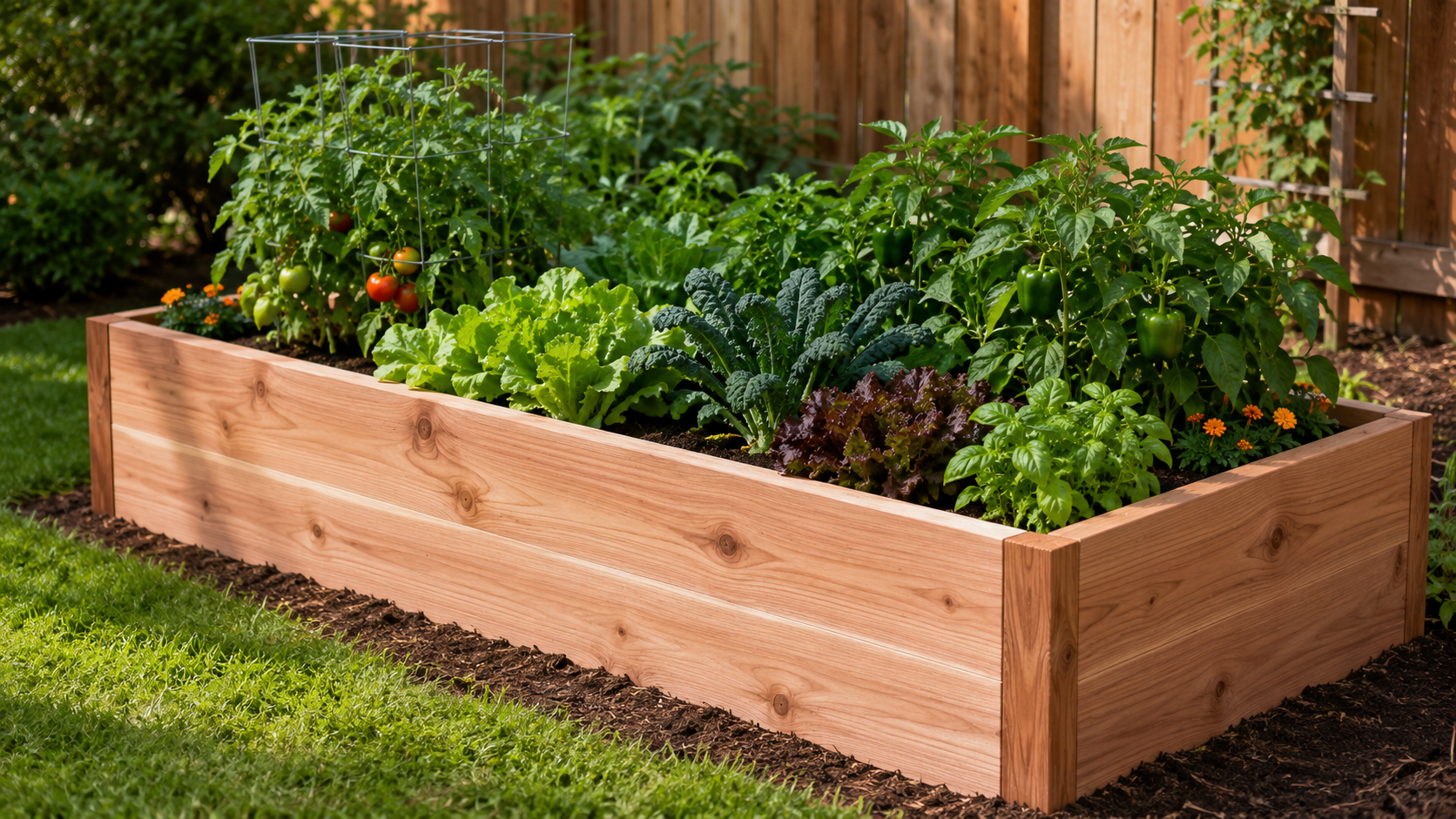
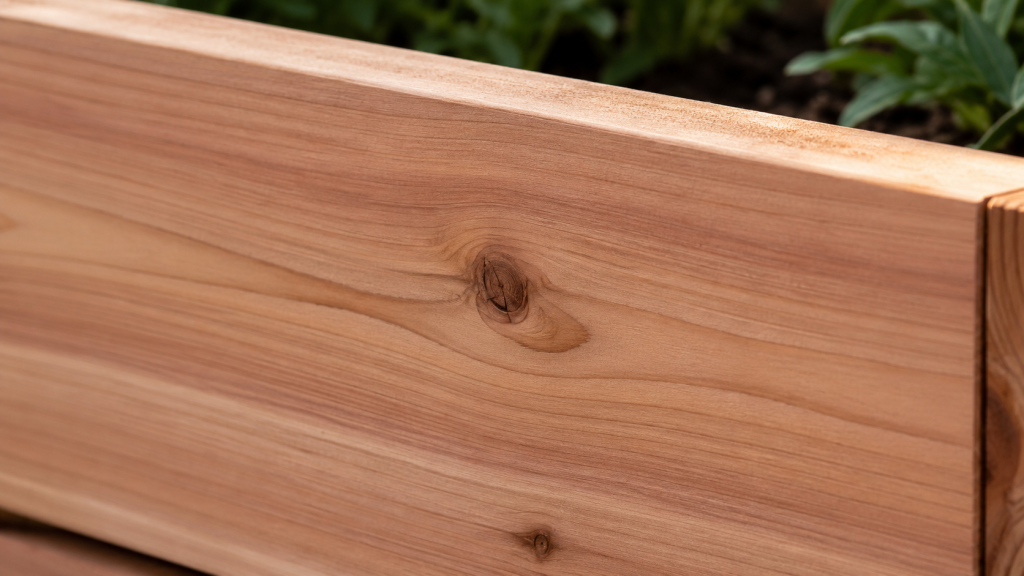
Cedar’s advantage starts inside the wood itself. It naturally contains oils and compounds, most notably thujaplicins, that resist rot and repel wood-boring insects without any chemical treatment. This is the same reason cedar has been the standard for fence posts, siding, and outdoor furniture for generations. It was doing this job long before anyone was building raised beds for tomatoes.
For an elevated garden bed, that natural resistance means the wood can sit in constant contact with moist soil and still hold its structure for ten years or more with basic care, compared to two or three seasons for untreated pine. Cedar also has a lower density and tighter, straighter grain than pine, which makes it less prone to warping and cupping as it moves through wet spring weather and dry summer heat.
Cedar breathes in a way composite never will. That air and moisture exchange through the wood helps regulate soil temperature and drainage, which matters more in an elevated bed than a ground-level one, since elevated beds already dry out faster and heat up quicker with more exposed surface area.
There’s a practical repair angle too. If one board on a cedar elevated bed does eventually wear out, you replace that board. You’re not tearing out an entire panel system or starting over. That modularity is easy to overlook when you’re comparing materials at the store, but it becomes obvious the first time a single joint fails and you realize how much easier it is to fix one piece than rebuild the whole structure.
What This Means for an Ohio Garden Specifically
Southeastern Ohio deals with real freeze-thaw cycles every winter, along with humid summers that keep soil moisture high for weeks at a time. That combination is hard on building materials. Wood expands and contracts, ground moisture wicks upward, and anything with a weak point will find it within a couple of seasons.
Cedar’s natural oils and tight grain make it more dimensionally stable through those swings than pine, which absorbs moisture unevenly and swells at the joints first. It also outperforms composite in how it handles temperature. A cedar elevated bed doesn’t retain heat the way a dark composite panel does, so the soil inside stays closer to ambient temperature, which is better for root development in peppers, tomatoes, and other heat-sensitive crops through a Zanesville summer.
If you’re building a bed that needs to survive an Ohio winter sitting outside, empty, cedar is the material that’s designed to take that kind of exposure without needing a tarp or a teardown every spring.
Basic Maintenance That Keeps Cedar Beds Going Longer
Part of cedar’s appeal is how little upkeep it actually needs compared to what people assume. An occasional application of food-safe linseed oil or a cedar-specific outdoor sealant, once a year at most, helps preserve the wood’s natural color and adds a small extra layer of moisture resistance on top of what the cedar already provides on its own.
Keeping soil pulled back an inch or two from the very top edge of the boards reduces the amount of direct moisture contact at the point most exposed to sun and rain. It’s also worth checking corner joints each spring after the ground has thawed, since that’s where any settling or movement over winter tends to show up first. A loose screw or a slightly shifted corner bracket is a five-minute fix in April. Left alone through another full season, it can turn into a bigger repair.
None of this is complicated work, and it’s a fraction of what pine requires to stay structurally sound, or what composite requires if a panel ever needs replacing.
Cost Over Time, Not Just Upfront
Pine wins on sticker price. Composite wins on the marketing pitch. Cedar wins on what you actually spend over the life of the bed.
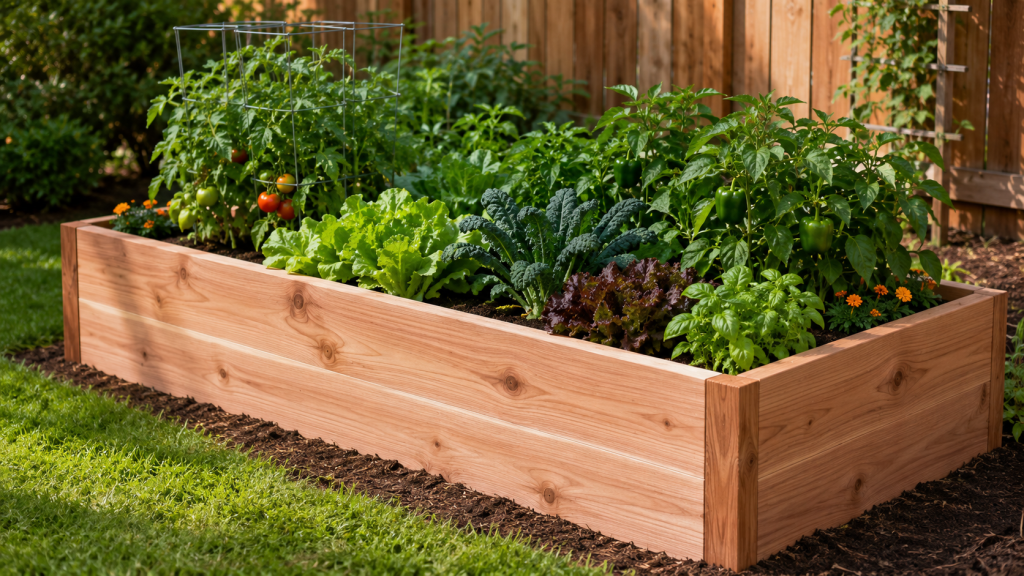
A pine elevated bed that needs replacing every two to three years costs more in materials and labor over a decade than a cedar bed built once and maintained with an occasional oil treatment. Composite avoids the replacement cycle but carries a higher upfront cost and limited repair options if something does fail. Cedar sits in the sweet spot: a moderate upfront cost, a lifespan that can stretch past a decade with basic care, and the ability to fix individual boards instead of replacing the whole structure.
For anyone building more than one bed, or planning a garden layout that includes several elevated beds across a yard, that difference in long-term cost adds up fast.
A Few Things to Look For in Cedar Specifically
Not all cedar is graded the same, and this is where a lot of DIY builds go wrong. Western red cedar and Eastern red cedar both work well for elevated beds, but heartwood, the darker inner wood of the tree, holds significantly more of those natural rot-resistant oils than sapwood, the lighter outer layer. If you’re buying boards, ask specifically about heartwood content, since a board that’s mostly sapwood won’t perform the way people expect cedar to perform.
Thickness matters too. A lot of pre-cut cedar bed kits use thinner boards to keep shipping costs down, and thinner cedar will still warp faster than a properly thick board, even with the natural rot resistance built in. For an elevated bed carrying the weight and moisture of a full soil load, thicker stock holds its shape better over time.
Getting the Right Bed for Your Yard
Material is only half the equation. The size, height, and placement of an elevated garden bed changes depending on what you’re growing, how much sun the spot gets, and how the bed fits into the rest of your landscape. A cedar bed built for herbs near a kitchen door looks and functions differently than one built for a full vegetable garden along a fence line.
If you’re planning an elevated garden bed and want it built right the first time, with the right cedar grade, the right dimensions for your space, and placement that actually works with your yard’s sun and drainage, explore our landscape services for a layout built around your property, or call us at (740) 454-0293 for a free on-site estimate.
